
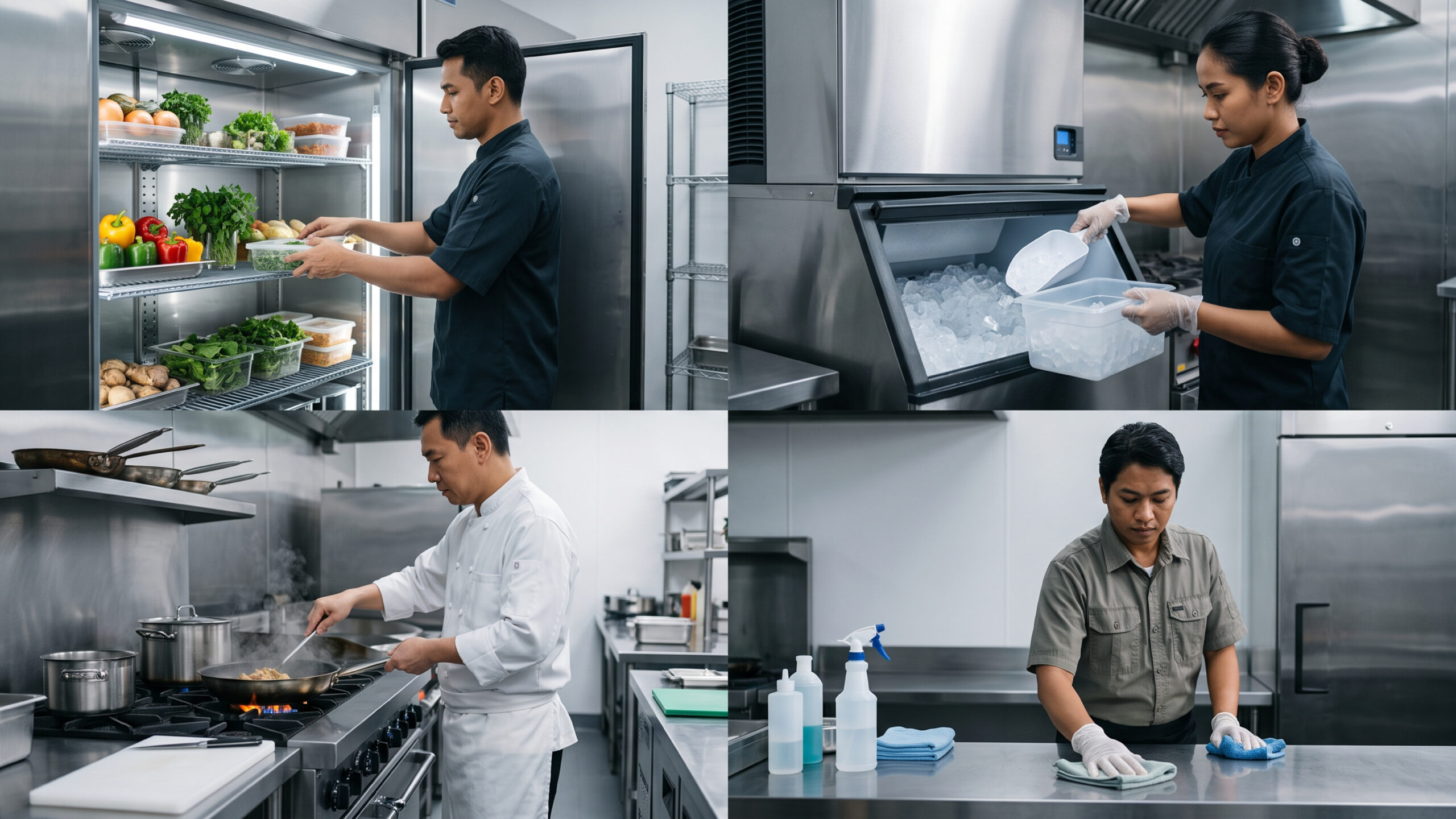
Behind every smooth-running service lies a commercial kitchen that can handle food preparation, cooking, storage, cleaning, and high-traffic periods.
Choosing the right kitchen equipment and tools from the beginning can help your team work more efficiently, keep food quality consistent, and avoid delays in operations.
F&B operators should prioritize equipment that supports their menu requirements, available kitchen space, daily operational demands, and long-term expansion plans, instead of investing in unnecessary appliances.
Here are 11 essentials to consider when building or upgrading a commercial kitchen.
1. Commercial Chiller
Fresh ingredients require reliable temperature control. A commercial chiller keeps vegetables, dairy, sauces, and prepared ingredients at appropriate refrigerated temperatures while allowing kitchen staff to access them throughout service.
- Best for: Restaurants, cafés, and businesses handling fresh ingredients daily.
- What to consider: Storage capacity, temperature stability, and energy consumption.
- Common mistake: Choosing a chiller based on size without considering accessibility during service.
2. Commercial Freezer
For businesses purchasing ingredients in bulk or storing frozen products, a commercial freezer helps maintain inventory availability and supports better stock planning.
- Best for: Restaurants, catering businesses, and high-volume kitchens.
- What to consider: Freezing capacity, storage organization, and operating costs.
- Common mistake: Purchasing an oversized unit that consumes unnecessary space and electricity.
3. Ice Machine
A consistent ice supply is essential for businesses serving cold beverages. Ice machines reduce dependence on purchased ice and help beverage stations operate smoothly during busy periods.
- Best for: Cafés, beverage outlets, bars, restaurants, and hotels.
- What to consider: Daily production capacity, ice type, and storage requirements.
- Common mistake: Estimating capacity using average demand instead of peak-hour consumption.
4. Combi Oven
A combi oven combines steam and convection cooking, allowing kitchens to prepare different dishes using one versatile appliance. It is particularly useful for operations requiring consistent cooking results.
- Best for: Restaurants, hotels, catering businesses, and central kitchens.
- What to consider: Cooking capacity, available functions, and staff training.
- Common mistake: Paying for advanced features that the kitchen rarely uses.
5. Commercial Stove or Cooking Range
The cooking range supports everyday hot food production. Whether your menu requires boiling, stir-frying, or simmering, choosing the right configuration can improve cooking efficiency.
- Best for: Restaurants and commercial kitchens with hot food menus.
- What to consider: Burner configuration, energy source, and menu requirements.
- Common mistake: Installing more cooking stations than the kitchen layout can support.
6. Griddle or Deep Fryer
Dedicated griddles and fryers help kitchens prepare popular menu items quickly while maintaining consistent cooking temperatures during high-volume service.
- Best for: Fast-casual restaurants, burger outlets, and fried chicken businesses.
- What to consider: Cooking capacity, temperature recovery, and cleaning requirements.
- Common mistake: Choosing equipment that cannot handle consecutive orders during peak hours.
7. Commercial Dishwash
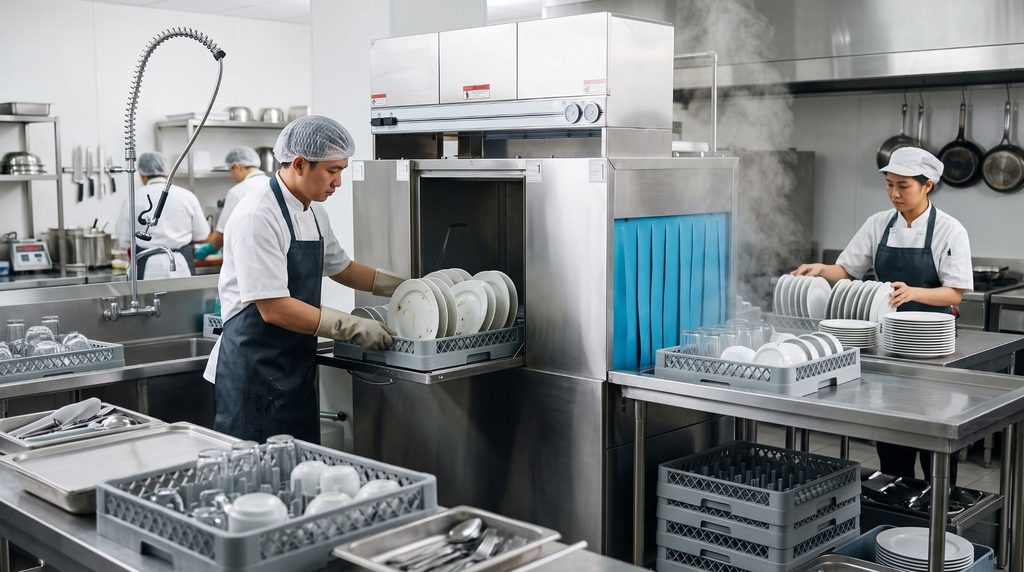
As customer volume increases, manual dishwashing can become a bottleneck. A large-capacity dishwasher helps return plates, glasses, and utensils to service more efficiently.
- Best for: Restaurants, hotels, cafés, and institutional kitchens.
- What to consider: Wash-cycle duration, rack capacity, and water consumption.
- Common mistake: Underestimating dishwashing demand during busy service periods.
8. Stainless Steel Work Tables and Sinks
Preparation and washing stations influence how efficiently staff move through the kitchen. Properly positioned work tables and sinks help organize tasks and reduce unnecessary movement.
- Best for: Food preparation, washing, and general back-of-house operations.
- What to consider: Dimensions, material quality, drainage, and workstation placement.
- Common mistake: Creating layouts that interrupt the natural flow between kitchen stations.
9. Food Holding Equipment
Keeping prepared dishes at suitable serving temperatures is essential for maintaining food quality. Holding cabinets, bain-marie units, and display warmers help bridge the gap between cooking and service.
- Best for: Hotels, buffets, catering businesses, and high-volume restaurants.
- What to consider: Temperature control, holding capacity, and service duration.
- Common mistake: Using food holding equipment to reheat food instead of keeping already heated dishes at safe serving temperatures, which can compromise food quality and safety.
10. Commercial Water Boiler
A water boiler provides convenient hot water access for beverage preparation and other daily kitchen tasks, reducing delays during busy service.
- Best for: Cafés, breakfast operations, hotels, and catering businesses.
- What to consider: Heating capacity, recovery time, and energy efficiency.
- Common mistake: Choosing a unit that cannot meet peak-hour hot water demand.
11. Exhaust Hood and Ventilation System
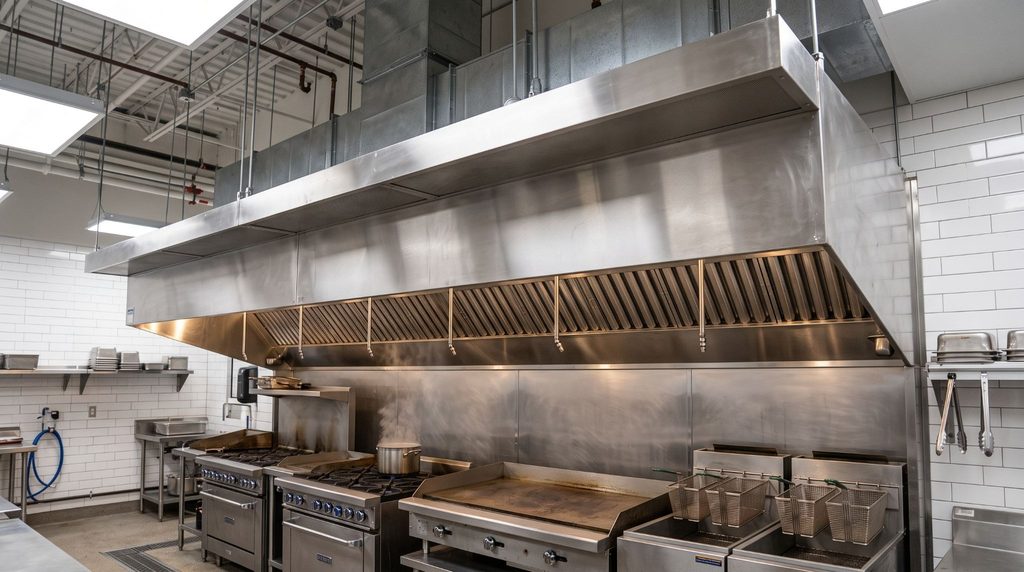
Commercial cooking produces heat, smoke, and grease that need proper extraction. An appropriately designed exhaust system supports a safer working environment and helps kitchens meet applicable Malaysian safety and local authority requirements.
- Best for: Kitchens operating stoves, fryers, griddles, and other hot cooking equipment.
- What to consider: Extraction capacity, grease filtration, ductwork, and safety requirements.
- Common mistake: Planning ventilation after cooking equipment has already been installed.
Choose Equipment Based on How Your Business Operates
A well-equipped commercial kitchen is defined by how effectively its equipment supports daily operations, not by the number of appliances it has. The best kitchen is the one designed around how the business actually operates.
A small café planning to open its second outlet has different requirements compared to a restaurant chain, hotel, hospital, or central kitchen.
Factors such as menu complexity, expected order volume, kitchen size, available capital expenditure, maintenance needs, and future expansion should all influence equipment decisions.
For growing businesses, equipment acquisition strategy matters too. Purchasing outright may suit some operators, while leasing or rent-to-own arrangements offer greater flexibility in managing initial costs.
Standardized equipment can also help multi-outlet businesses maintain consistent cooking quality across locations while simplifying staff training and maintenance.
Build a Kitchen That Is Ready to Perform
Selecting the right kitchen equipment and tools is about creating a kitchen that operates consistently, efficiently, and reliably.
Endura supports F&B operators through commercial kitchen equipment, kitchen consultancy, design and build, and after-sales maintenance. Our solutions cover refrigeration, cooking, dishwashing, food holding, and other essential kitchen requirements.
Tell us your menu, kitchen size, and expected daily order volume, and we’ll help recommend an equipment list that fits your operational needs and budget.