
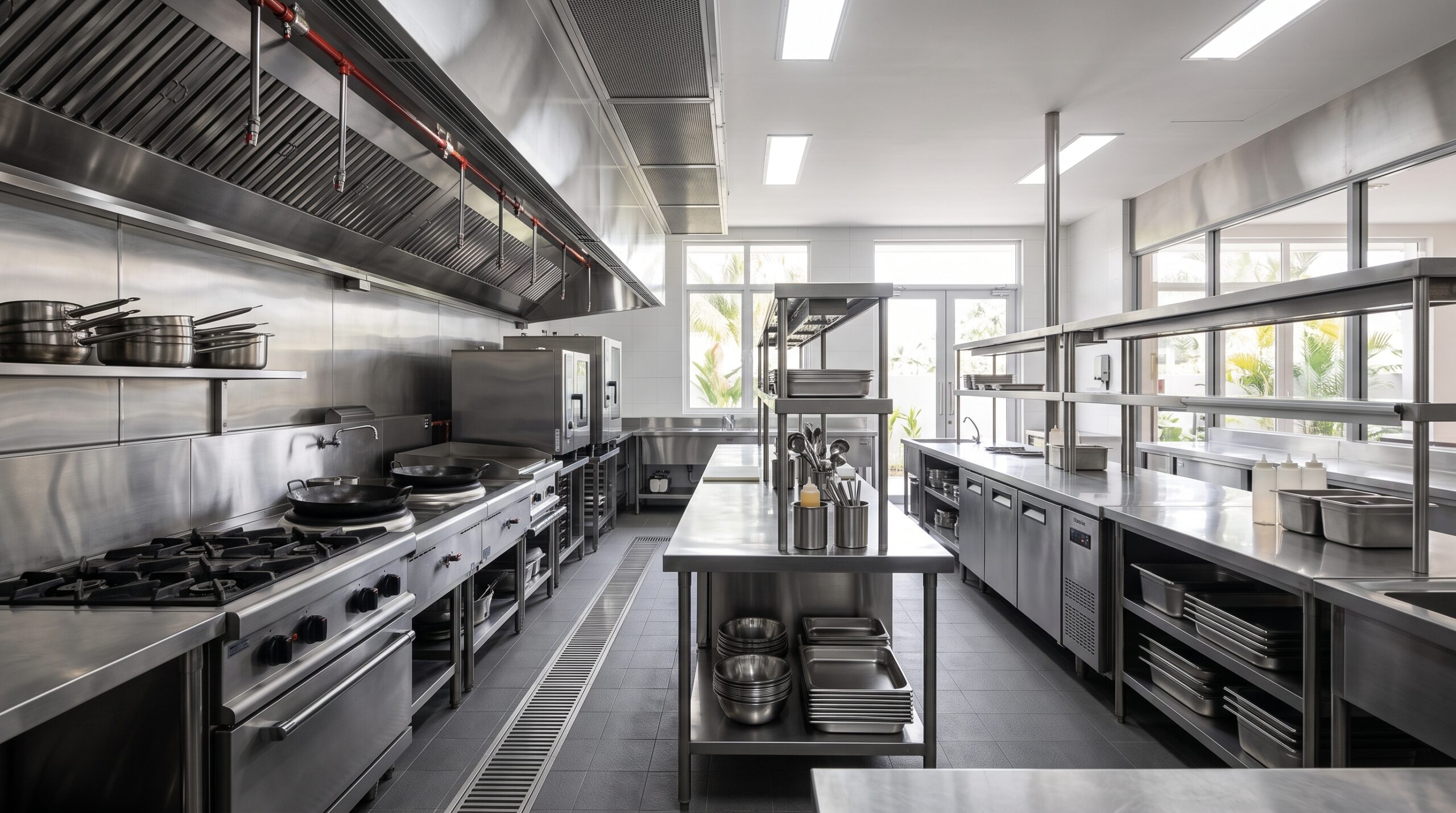
Walk into a commercial kitchen, and you’ll probably find stainless steel almost everywhere. Cooking stations, preparation counters, sinks, and storage units often use the same familiar silver material.
But here’s something worth knowing: not all stainless steel is made the same.
Two preparation tables might look identical when they’re brand new, yet one could develop rust spots or dents much sooner than the other. The difference often comes down to three things: steel grade, thickness, and surface finish.
If you’re shopping for cooking equipment in Malaysia, understanding these details can help you choose something that will hold up to the demands of your kitchen.
1. Steel Grades: What’s the Difference Between 201, 430, 439, and 304?
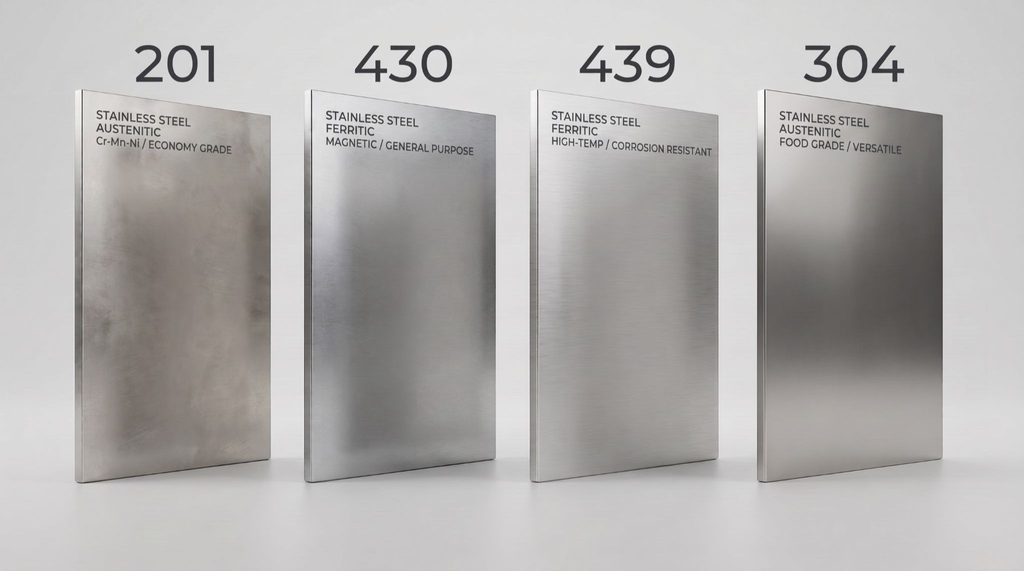
You’ll often come across numbers like 201, 430, 439, and 304 when looking at commercial kitchen stainless steel.
They’re not model numbers. They refer to different stainless steel compositions, and each behaves differently when exposed to moisture, heat, and cleaning products.
Here’s a quick comparison of grades used in Malaysian kitchen equipment.
| Steel Grade | What You Should Know | Common Applications |
| 201 | More budget-friendly, but generally less resistant to corrosion in demanding environments | Equipment panels and less exposed components |
| 430 | Offers moderate corrosion resistance for suitable indoor applications | Cabinets, appliance panels, and equipment housings |
| 439 | Has good weldability and is suitable for certain fabricated components | Selected sinks, panels, and fabricated equipment |
| 304 | Offers strong general corrosion resistance, particularly in frequently washed areas | Food preparation tables, sinks, and kitchen workstations |
So, should you always choose grade 304?
Not necessarily. If you’re buying a cabinet for a relatively dry storage area, another suitable grade may do the job.
However, for surfaces that are constantly exposed to water, food ingredients, and cleaning, 304 stainless steel kitchen equipment is often worth considering.
One thing to remember: stainless steel is corrosion-resistant, not completely rustproof. Even grade 304 can develop corrosion when exposed to salt deposits or unsuitable cleaning chemicals.
What to ask your supplier: Which steel grade is used for the parts that come into contact with food or water?
Don’t assume every component uses the same grade just because the product is labelled stainless steel.
2. Steel Thickness: Does Thicker Always Mean Better?
Imagine placing several heavy pots on a preparation table every day. Over time, you might notice the surface starting to bend slightly or feel less stable.
This is one reason why stainless steel thickness deserves attention.
In Malaysian commercial kitchen fabrication, common sheet thicknesses include 0.8mm, 1.0mm, and 1.2mm, depending on the equipment and its intended use.
| Thickness | What It Means for Your Kitchen |
| 0.8mm | Lighter construction, often used for supported panels or less demanding applications |
| 1.0mm | A practical middle ground for various kitchen components |
| 1.2mm | Provides greater rigidity for work surfaces and heavier-use applications |
Although the difference between 0.8mm and 1.2mm sounds small, it can noticeably affect how much a panel flexes under pressure.
But thicker doesn’t automatically mean stronger equipment.
A well-built table with a properly reinforced frame may last longer than a thicker table with poor welding or inadequate support.
That’s why it’s worth checking the construction underneath, not just the shiny surface on top.
What to ask your supplier: How thick is the steel, and how is the equipment reinforced?
You can browse Endura’s worktables and sinks to explore commercial kitchen workstation options.
3. Surface Finishing: Why Some Stainless Steel Scratches More Visibly
If you’ve ever worked in a busy kitchen, you’ll know that scratches are almost unavoidable.
Pots get moved around, utensils brush against counters, and work surfaces are cleaned several times a day.
What many buyers overlook is how much the stainless steel surface finish affects the appearance of these marks.
| Finishing Type | What to Expect |
| Brushed | Fine directional lines that help make minor scratches less noticeable |
| Satin | A softer, less reflective appearance suitable for everyday work surfaces |
| Polished | A shiny, reflective appearance where fingerprints and surface marks may stand out more |
For example, brushed stainless steel is often a practical choice for a busy preparation counter because small marks can blend into its grain.
A polished finish may look attractive in a display kitchen, but it can require more frequent wiping to maintain its appearance.
Keep in mind that a finish doesn’t necessarily make steel harder to scratch. It may simply make scratches less visible.
There’s also hygiene to think about. Deep scratches, rough welds, or poorly finished corners can trap food residue and make cleaning more difficult.
What to ask your supplier: Is the finish suitable for frequent cleaning, and are the welded joints smooth?
Choosing Stainless Steel Equipment That Fits Your Kitchen
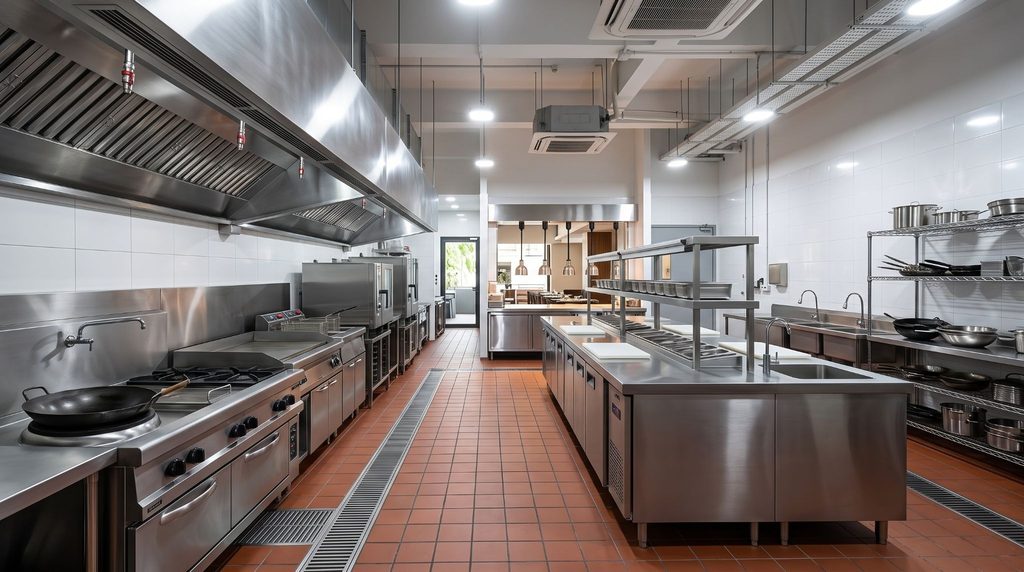
There’s no single specification that works for every F&B operation.
A busy restaurant with frequently washed preparation surfaces may benefit from grade 304 stainless steel, while a dry storage cabinet may have different requirements.
Likewise, heavy-duty workstations need appropriate thickness and reinforcement, while equipment panels may not require the same construction.
Before purchasing stainless steel cooking equipment, consider the grade, thickness, finishing, and overall build quality rather than focusing on price alone.
For Malaysian F&B operators, Endura F&B Solutions offers commercial kitchen equipment, consultancy, and design services to support different kitchen requirements.
Whether you’re setting up a new restaurant or replacing existing workstations, contact Endura F&B Solutions to explore stainless steel solutions suited to your business.