
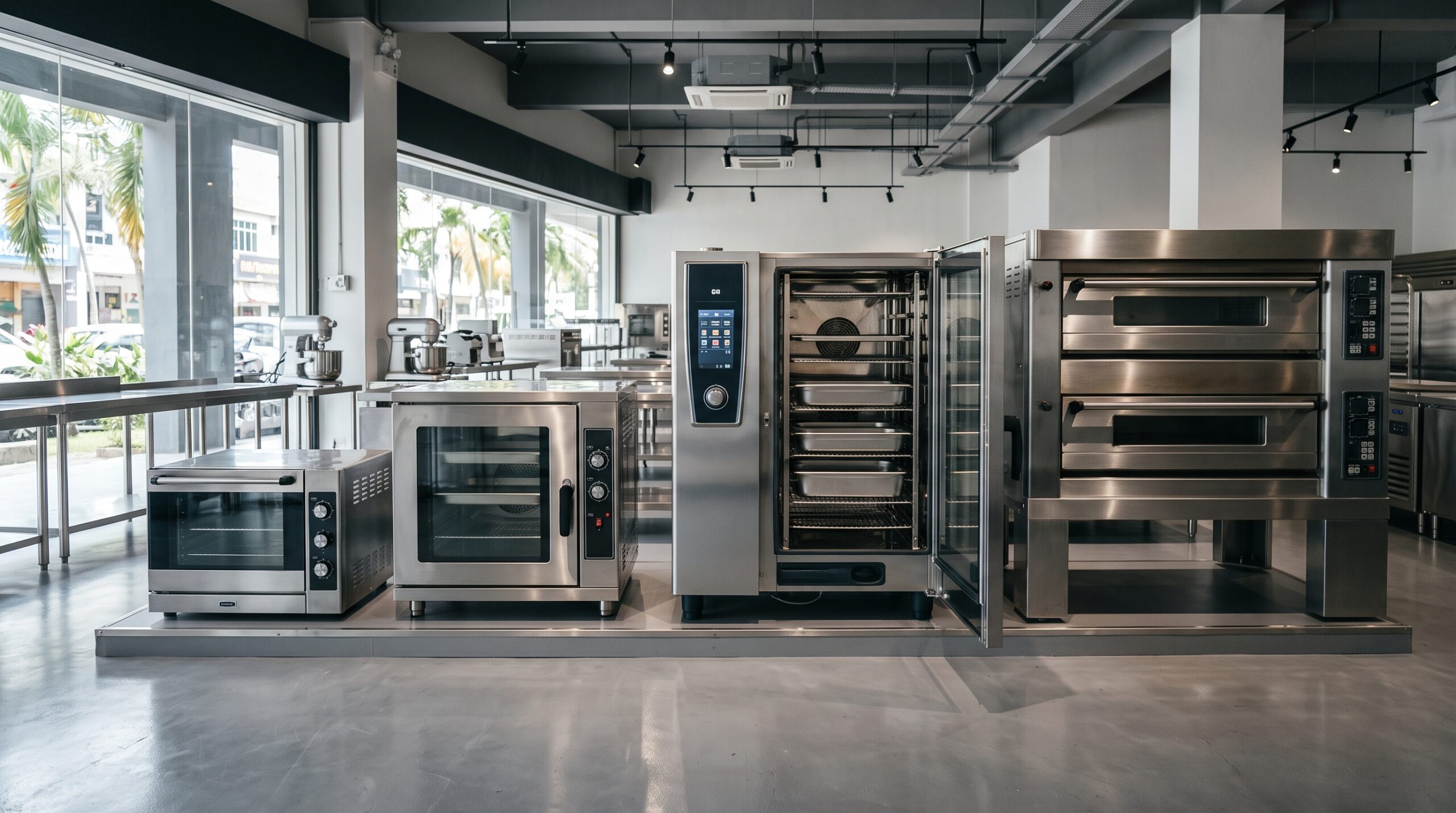
Walk into a commercial kitchen showroom, and you’ll find ovens ranging from straightforward convection models to sophisticated combi ovens with programmable cooking settings. The price differences can be substantial. But does spending more guarantee better results? Not necessarily.
A small bakery producing croissants throughout the morning has different priorities from a hotel kitchen preparing dozens of dishes for a buffet. Yet both could be considering similar-looking equipment.
When comparing commercial oven brands in Malaysia, the useful details aren’t always printed on the price tag. Cooking performance, batch capacity, running costs, and access to repairs can make a bigger difference once the oven becomes part of your daily routine.
Different Kitchens, Different Oven Priorities
Before comparing manufacturers, look at your menu and how the kitchen actually operates.
A bakery producing artisan bread may need strong, consistent heat from a deck oven. A café reheating sandwiches throughout the day could benefit from a high-speed oven that doesn’t require lengthy preparation.
Meanwhile, a commercial combi oven combines steam and convection cooking, making it useful for restaurants preparing vegetables, proteins, and baked dishes using one appliance.
Here’s how the four most common commercial oven types compare:
| Oven Type | Common Applications |
| Convection Oven | Pastries, cookies, roasting, and general baking |
| Combi Oven | Steaming, roasting, and mixed-menu production |
| Deck Oven | Artisan bread, pizza, and crust-focused baking |
| High-Speed Oven | Sandwiches, snacks, and quick-service preparation |
There’s little benefit in paying for advanced steam functions if your kitchen only needs to bake cookies.
Different Ovens, Different Cooking Results
Not all commercial ovens heat food the same way. Some rely on circulating hot air, while others use steam, heated stone surfaces, or a combination of heating technologies.
These differences affect how food cooks, including its texture, moisture, browning, and overall consistency. Before choosing an oven, consider what you’re preparing and the results your customers expect.
| Oven Type | How It Works | Suitable For | Cooking Outcome |
| Convection Oven | A fan circulates heated air throughout the cooking chamber. | Bakeries, cafés, and restaurants | Promotes even browning and crisp surfaces, although delicate foods may lose moisture. |
| Combi Oven | Combines circulated hot air with adjustable steam. | Restaurants, hotels, and catering kitchens | Offers better moisture control for tender proteins, vegetables, and baked dishes. |
| Pizza Oven | Uses intense heat, often transferred through a hot stone base and surrounding heat. | Pizzerias and pizza-focused restaurants | Produces a crisp base, well-developed crust, and rapid surface browning. |
| Deck Oven | Uses heat from above and below, including radiant heat and direct heat from the deck surface. Multiple decks increase batch capacity. | Artisan bakeries and high-volume baking operations | Develops structured crusts and consistent baking results, particularly for bread. |
| High-Speed Oven | Combines rapidly circulated hot air, often through impingement, with microwave heating in certain models. | Quick-service restaurants, convenience stores, and ready-to-eat food retailers | Heats food quickly while helping achieve a browned or crisp exterior. |
Why Does the Heating Method Matter?
Imagine baking the same product in different ovens.
A croissant baked in a convection oven may develop a crisp, evenly browned exterior. A combi oven with carefully controlled humidity can influence moisture retention and crust development. Meanwhile, a high-speed oven may be more practical for reheating an already-baked croissant quickly, rather than producing an entire batch from raw dough.
The same principle applies to pizza. A regular convection oven can cook pizza, but without the intense contact heat of a pizza oven or deck surface, achieving the same crisp base may be more difficult.
Using one oven for every menu item may save kitchen space, but it can also mean compromising on texture, cooking time, or production capacity.
For this reason, restaurant owners should evaluate their menu before investing in equipment. A bakery may need an oven that prioritises crust development and batch consistency, while a retail ready-to-eat outlet may benefit more from quick heating and simple operating controls.
Explore Endura’s convection ovens, combi ovens, and pizza ovens to compare options based on your cooking requirements.
Why Choose Oven Cooking Over Traditional Cooking Methods?
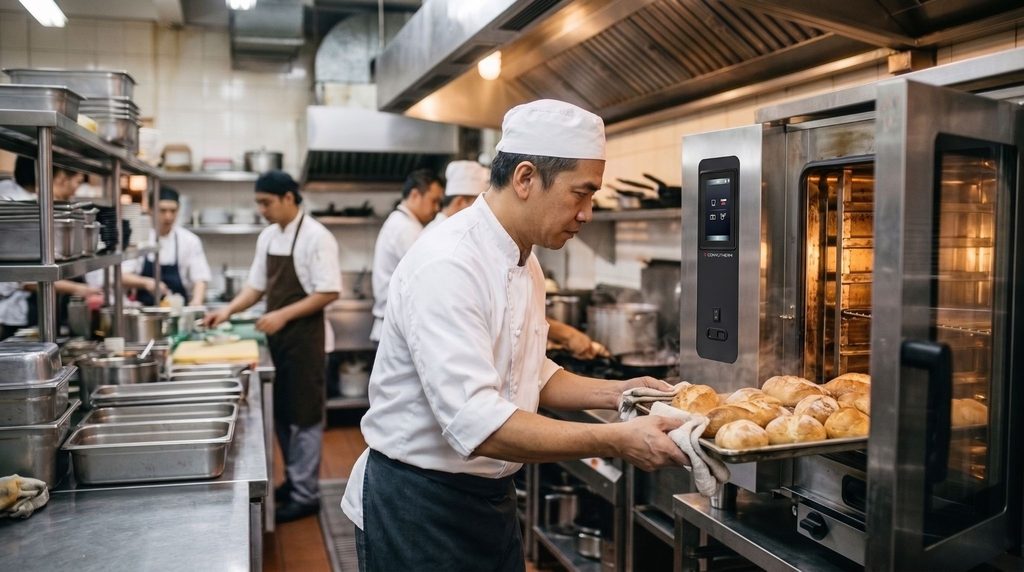
Cooking over an open flame or wok works well for dishes that require direct heat and constant attention. However, preparing large quantities this way can be labour-intensive, especially when several batches need to be cooked simultaneously.
Commercial ovens offer a different advantage. By distributing heat throughout the cooking chamber, they allow kitchens to prepare multiple portions with less hands-on supervision and more consistent results.
For example, roasting chicken in a commercial oven allows chefs to cook larger batches while controlling temperature and cooking time. This frees up staff to focus on other dishes instead of continuously monitoring individual portions over a stove.
High-volume cooking is only part of the equation. Keeping food ready for service matters just as much.
In busy restaurants, hotels, and catering kitchens, meals aren’t always served immediately after cooking. Some commercial ovens offer dedicated holding functions that help maintain suitable food temperatures until service, while separate holding cabinets may be more practical for longer waiting periods.
This makes ovens particularly valuable for operations that need to balance large-batch production, consistent cooking results, and timely food service.
Rather than replacing traditional cooking methods entirely, commercial ovens help kitchens handle repetitive, high-volume tasks more efficiently while allowing chefs to focus on dishes that benefit from direct cooking techniques.
The Electricity Bill Deserves Attention Too
When comparing commercial oven prices in Malaysia, consider both the upfront cost and ongoing operating expenses. For bakeries using ovens for several hours daily, differences in electricity consumption add up over time.
Check each model’s rated power, estimated energy usage, and preheating requirements. For combi ovens, factor in water filtration and cleaning chemicals. Installation costs also matter, as some appliances require three-phase electricity, specific ventilation, or additional plumbing.
Before ordering, confirm your premises meet the equipment’s requirements to avoid costly modifications. An energy-efficient oven might cost more upfront but offer better long-term value, depending on usage.
What Happens When the Oven Stops Working?
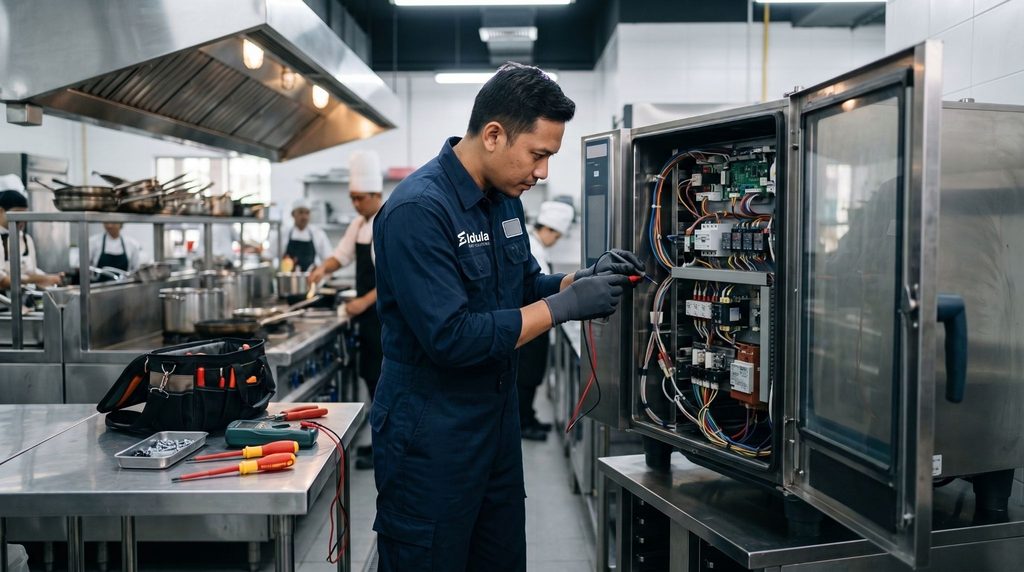
An oven breakdown during a weekend service can quickly become a serious operational problem.
That’s why warranty coverage and technician availability deserve as much attention as cooking features.
Before buying, ask where replacement parts come from, whether local technicians can service the model, and what the repair process involves.
Endura’s maintenance team handles inspections, repairs, and preventive servicing through directly employed technicians.
Endura F&B Solutions provides after-sales support through its technical team, with published response targets of 24 hours within Klang Valley and 48 hours outside the region, subject to service coverage.
For restaurant owners, knowing the servicing process beforehand is far more useful than discovering it during a breakdown.
Choose an Oven That Fits Your Kitchen
A suitable restaurant oven supplier should understand your menu, kitchen space, and expected order volume before recommending equipment. Endura F&B Solutions offers kitchen consultancy alongside equipment supply, helping operators assess specifications and explore purchasing options, including outright ownership, rent-to-own, and leasing, subject to applicable terms.
Rather than choosing based on brand names or price alone, evaluate cooking performance, daily production needs, and long-term ownership costs.
Speak with Endura F&B Solutions about your menu, available kitchen space, and production requirements to explore suitable commercial oven options.