
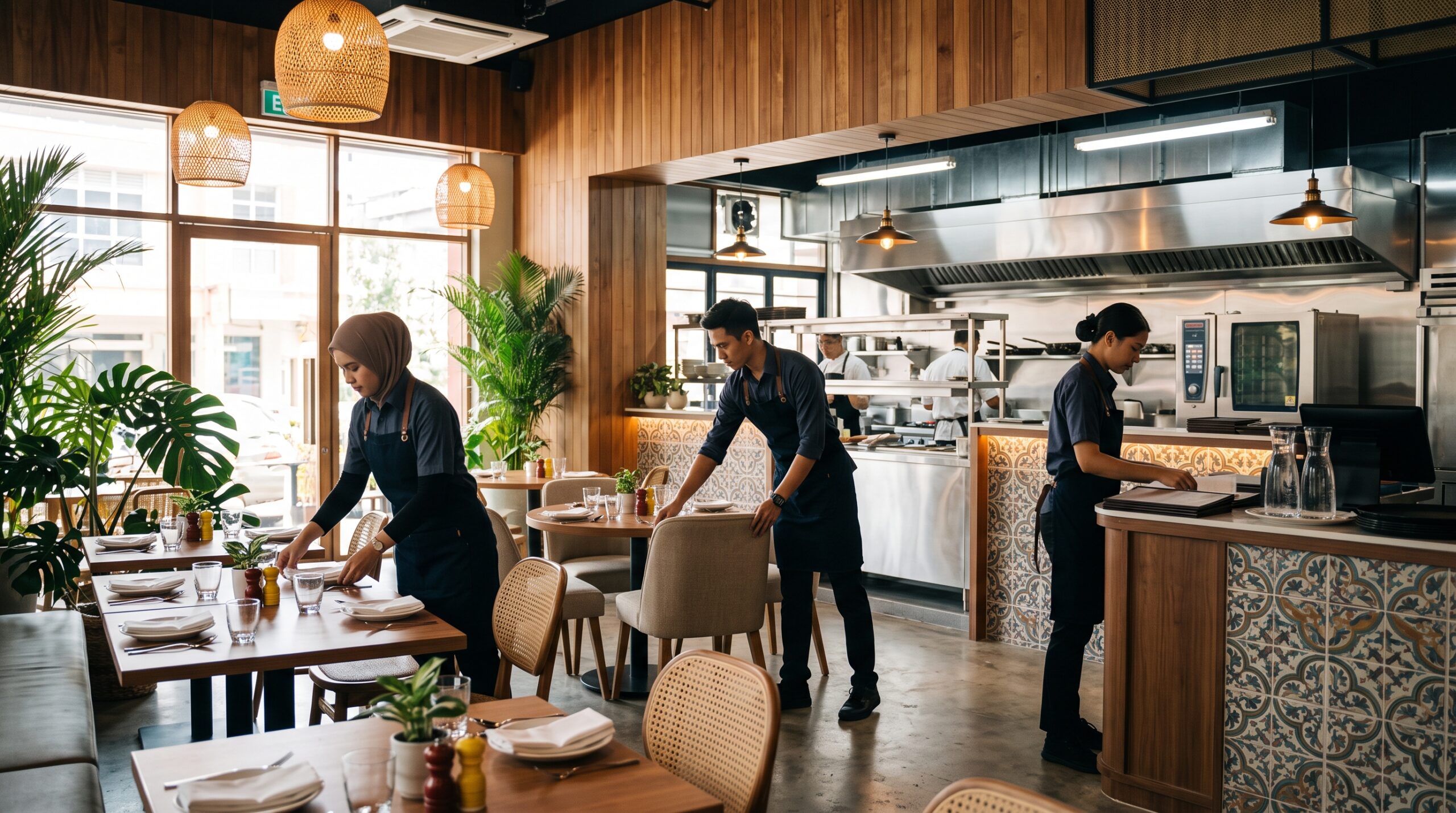
Opening a restaurant involves bringing together many elements, from developing the right dining concept to creating a space where everything runs efficiently. Whether you’re starting your first F&B business or expanding an established brand, proper preparation plays an important role in your restaurant’s success.
With so many responsibilities to manage, having a restaurant opening checklist can help you stay organised, make informed decisions, and prepare for daily operations.
Here are seven key considerations to guide your restaurant opening journey in Malaysia, with support from Endura’s expansion services.
1. Evaluate Your Restaurant Location
Before settling on a location, explore the surrounding dining scene and consider whether it matches your restaurant concept and target customers.
Look into nearby competitors, customer demographics, accessibility, and potential foot traffic.
For example, restaurants in Kuala Lumpur’s business districts may attract office workers during lunch hours, while those in residential areas might appeal more to families.
Understanding your location can help determine suitable operating hours, menu offerings, and seating arrangements.
2. Develop Your Menu Before Planning the Kitchen
Your menu plays an important role in shaping how your restaurant operates. Before designing the kitchen, decide which dishes you’ll serve, how they’ll be prepared, and what ingredients are needed.
Consider the cooking methods, preparation time, and ingredient storage requirements for each dish. A menu featuring grilled dishes, for example, will have different kitchen requirements from one focused on baked goods or quick-service meals.
Keeping your menu manageable also helps you identify shared ingredients, plan stock quantities, and avoid investing in equipment you may rarely use.
With a clearer menu direction, you can make more informed decisions about your kitchen layout, equipment, and staffing needs.
3. Plan Your Kitchen Layout and Equipment Together
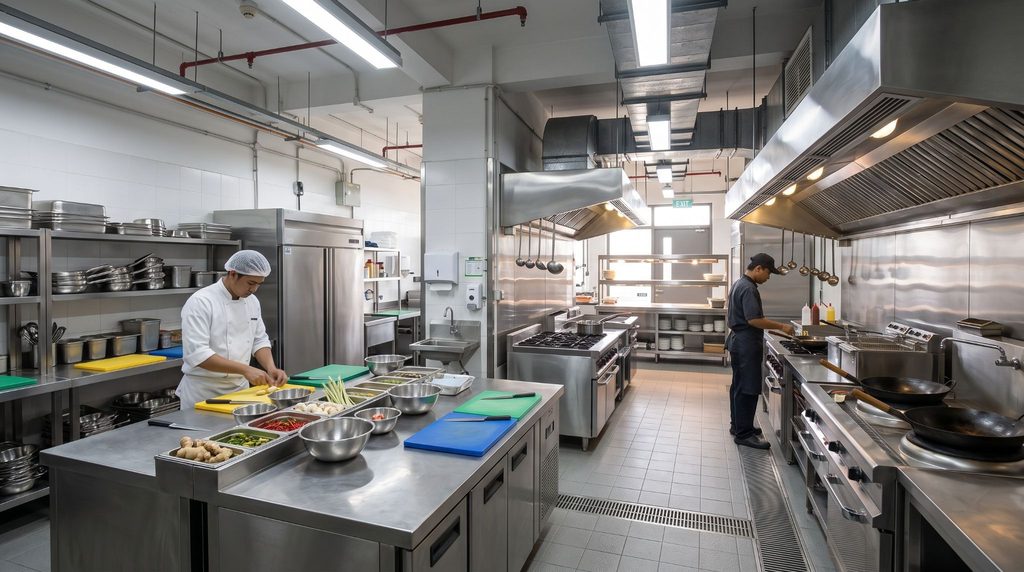
Once your menu is established, the next step is creating a kitchen that supports its preparation and expected order volume.
Consider how ingredients move between storage, preparation, cooking, and serving areas. An efficient commercial kitchen setup should minimise unnecessary movement while providing sufficient space for employees to work comfortably.
Equipment selection should follow the same approach. Rather than purchasing every available appliance, prioritise those suited to your menu, production capacity, and workspace.
For example:
| Restaurant Type | Equipment Considerations |
| Quick-service restaurant | High-capacity cooking appliances for faster order preparation |
| Café or casual dining | Compact preparation stations and refrigeration |
| Family-style restaurant | Appliances suitable for larger cooking batches |
| Delivery-focused kitchen | Space-saving equipment for continuous order fulfilment |
Beyond the initial investment, evaluate energy consumption, durability, and servicing requirements.
Through its commercial kitchen solutions and flexible purchasing arrangements, Endura F&B Solutions helps F&B operators find suitable equipment while managing their investment budgets.
For more information, also read: 11 Essential Kitchen Equipment and Tools for F&B
4. Prepare Restaurant Licences and Regulatory Requirements
Operating a restaurant in Malaysia requires compliance with relevant business licensing and food safety regulations.
Depending on your restaurant’s location and business activities, several registrations and approvals may be necessary before opening.
Some key requirements include:
| Requirement | Relevant Authority |
| Business registration and particulars | Companies Commission of Malaysia (SSM) |
| Business premises licence | Local Authority (PBT) |
| Food premises registration | Ministry of Health Malaysia (KKM) |
| Food handler training | KKM-recognised training providers |
| Food handler typhoid vaccination | Applicable Malaysian food hygiene requirements |
Restaurant operators can refer to the Ministry of Health Malaysia’s FoSIM platform for food premises registration.
Requirements may differ between local councils, so confirm the applicable approvals for your restaurant before opening.
5. Coordinate Suppliers and Inventory Management
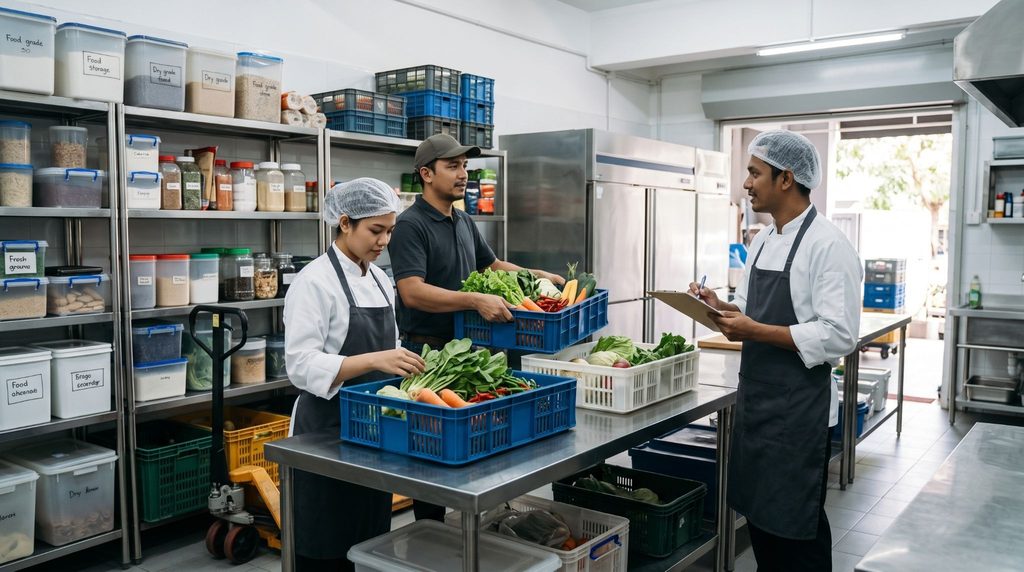
Reliable suppliers and organised inventory processes are essential for keeping restaurant operations running smoothly.
Plan your ingredient orders according to expected customer demand, menu requirements, and available storage space.
Establish clear procedures for receiving deliveries, monitoring stock levels, and checking ingredient quality.
Consistent purchasing practices can also help maintain food quality while reducing unnecessary waste.
Additionally, consider preventive equipment servicing to avoid unexpected disruptions. Endura’s maintenance services provide technical support and repair solutions for commercial kitchen operations.
6. Recruit and Train Your Restaurant Staff
A well-prepared team plays an important role in delivering a positive dining experience.
Determine your staffing requirements based on seating capacity, operating hours, and anticipated customer traffic.
Employee training should cover food preparation standards, customer service, hygiene procedures, order management, and workplace safety.
Providing hands-on training before opening allows employees to familiarise themselves with kitchen workflows and daily responsibilities.
Clear operating procedures also help maintain service consistency as your restaurant grows.
7. Conduct a Soft Opening Before the Official Launch
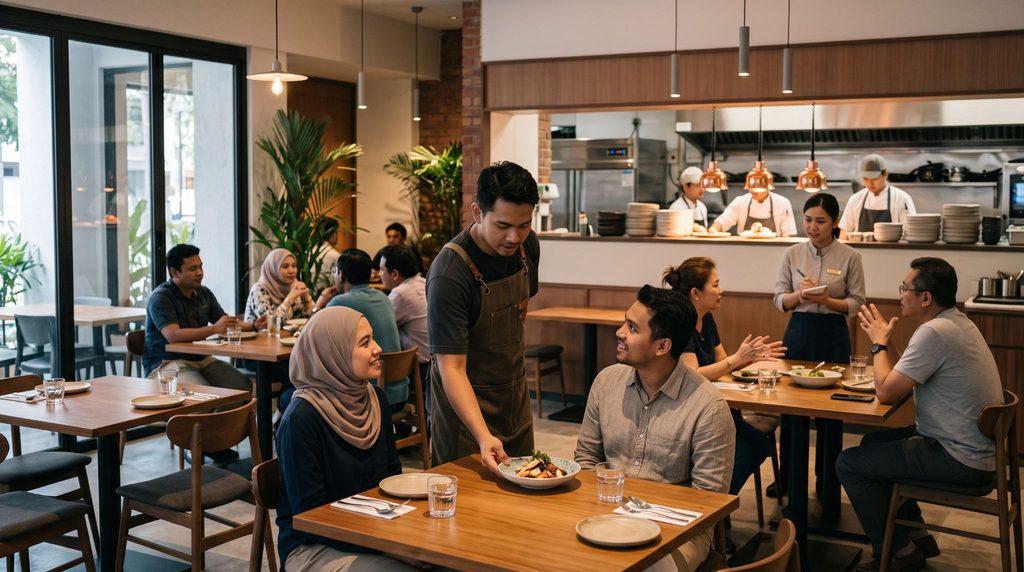
A soft opening allows you to evaluate your restaurant’s readiness before welcoming customers at full capacity.
Consider inviting a limited number of guests to experience your food and service while your team tests kitchen coordination, order accuracy, and serving times.
Gather feedback to identify areas that may need adjustments.
Use this opportunity to ensure that your equipment, payment systems, inventory processes, and employees are ready for regular operations.
Making improvements before the official launch can help create a smoother opening experience.
Prepare Your Restaurant for Success with Endura F&B Solutions
Bringing a restaurant concept to life requires careful coordination between location planning, kitchen preparation, staffing, and operational processes.
Following a structured restaurant opening checklist can help F&B operators approach each stage with greater clarity, whether establishing a new restaurant or growing an existing business.
For F&B businesses in Malaysia, Endura F&B Solutions offers solutions covering kitchen consultancy, design and build, commercial kitchen equipment, and after-sales support.
Ready to turn your restaurant plans into reality? Connect with Endura F&B Solutions to explore kitchen solutions tailored to your business needs.